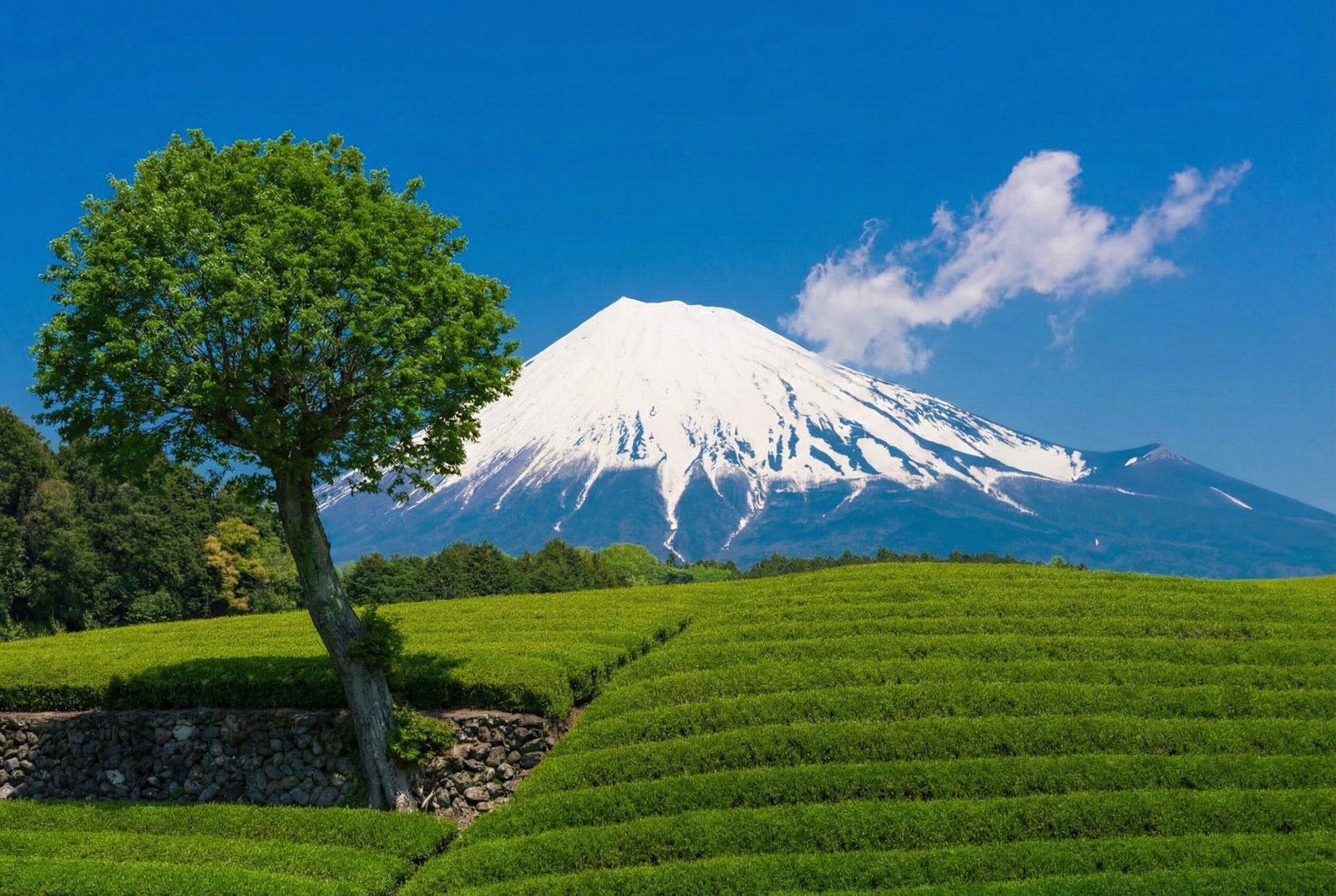
 Shade-grown tea fields, Japan
Matcha Grades Explained:
What You Actually Need to Know
The terms "ceremonial" and "culinary" were invented by Western importers — not by Japanese tea masters. Here's what really determines matcha quality, and how to choose the right grade for you.
"Ceremonial vs. Culinary" Is Marketing, Not a Standard
If you've ever Googled matcha grades, you've probably seen the same story: ceremonial grade is for drinking, culinary grade is for cooking. Simple, right?
Here's the truth most brands won't tell you: neither term exists in Japan's tea industry standards. No Japanese agricultural authority — not the Ministry of Agriculture (MAFF), not the Japan Tea Central Association — recognizes "ceremonial" or "culinary" as official categories. These labels were created in the early 2000s by Western importers to simplify matcha for consumers unfamiliar with Japanese tea culture.
"Ceremonial grade = healthy.
Culinary grade = low quality."
Peer-reviewed studies confirm that culinary matcha often contains higher concentrations of EGCG and total catechins — the antioxidants people prize — because leaves receive more sunlight during growth.
In Japan's own tea tradition, quality is judged by a completely different test: whether the matcha can survive koicha (thick tea), prepared at extremely high concentration with ~4 g of powder in only 30–40 ml of water. At that intensity, even the faintest bitterness becomes overwhelming. Only matcha with near-zero astringency and profound umami depth passes.
What this means for you: Don't choose matcha by label alone. "Ceremonial grade" from one brand might be lower quality than "premium" from another. The label reflects a company's marketing — not a universal standard. Focus on the factors below instead.
Three Factors That Actually Shape Matcha Quality
Forget the marketing tiers. The quality of any matcha is determined by measurable, physical factors that no amount of label redesign can fake.
3–4 weeks of 90–98% shade coverage before harvest blocks sunlight, forcing the plant to accumulate L-theanine (umami) while suppressing bitter catechins.
Just as grape variety determines wine character, the cultivar sets matcha's flavor ceiling. Top cultivars like Asahi and Gokou are bred for shade-tolerance and intense umami.
Traditional granite mills produce only 20 g per hour, keeping temperatures low enough to preserve amino acids. The result: 5–10 micron particles, finer than cosmetic powder.
Shading Methods: The Hidden Quality Indicator
How tea is shaded matters enormously. Most consumers never learn about this — but it's one of the biggest factors behind flavor and price.
Natural reeds and straw scatter light gently, maximizing chlorophyll and L-theanine production. Fewer than 10 craftspeople in all of Japan still master this technique.
Modern best practice. Nets mounted on frames ~2 m above the plants maintain airflow, promote upward leaf growth, and allow precise shade-rate control.
Budget method. Cloth laid directly on plants. Fast to set up, but creates uneven light and heat pockets. Typically used for culinary-grade production.
Understanding Matcha Grades: A Practical Guide
While "ceremonial" and "culinary" aren't official Japanese terms, they've become useful shorthand worldwide. Here's what each grade generally means at reputable sellers — and how to read between the lines.
Ceremonial Grade
Koicha & Usucha QualityThe highest tier — meant for drinking straight with just hot water and a bamboo chasen. You should taste deep umami sweetness, zero bitterness, and a lingering finish. The powder feels like silk between your fingers.
Best for: Traditional tea ceremony, daily mindful drinking, pure matcha shots.
Premium Grade
Latte & Daily Drinking QualityThe versatile sweet spot — smooth enough to drink straight, yet robust enough to shine through milk. Balanced umami with a hint of pleasant bitterness. Color stays vivid green even in a latte or smoothie.
Best for: Matcha lattes, iced matcha, smoothies, daily drinking.
Culinary Grade
Baking & Cooking QualityDesigned for recipes, not solo sipping. This isn't "bad matcha" — it's matcha with a different biochemical profile. The stronger tannins and astringency cut through sugar, butter, and cream, keeping matcha flavor recognizable in cookies, ice cream, and chocolate.
Best for: Baking, ice cream, energy bars, matcha chocolate, smoothie bowls.
The Grape Varieties of Matcha: Why Cultivar Matters
Just as Pinot Noir and Chardonnay produce fundamentally different wines, tea cultivars determine matcha's flavor DNA. Japan has perfected specialized shade-grown varieties through nearly a century of selective breeding, starting in Uji in the 1930s. Today, 95% of Kyoto's first-flush tencha comes from deliberately cultivated varieties.
| Cultivar | Flavor Profile | Typical Use |
|---|---|---|
|
Asahi あさひ |
Razor-sharp umami, elegant notes of fine cocoa and floral aroma. Extremely limited yield — leaves are thinner and larger than other cultivars, unsuitable for sencha. | Competition-grade koicha. The rarest and most prized matcha cultivar. Registered 1954. |
|
Gokou ごこう |
Deep, creamy, almost buttery with oceanic sweetness similar to premium nori. Exceptional shade-tolerance — thrives under prolonged darkness. | Backbone of luxury koicha blends. Known for near-zero bitterness at any concentration. |
|
Samidori さみどり |
Velvety smooth, refined umami with a natural sweetness and captivating fragrance. Strong, stable growth with generous yield. | Uji's most-planted tencha cultivar. Excellent solo or in premium blends. Registered 1954. |
|
Saemidori さえみどり |
Stunning neon-bright green — among the most vivid of all cultivars. Lighter flavor depth but exceptional color impact. Early-sprouting, frost-avoidant. | Color-improvement blending. Popular with artisan blenders crafting visually striking matcha. |
|
Yabukita やぶきた |
Standard "Japanese green tea" taste — balanced but unremarkable for matcha. Grassy, slightly woody. Vulnerable to spring frost damage. | Workhorse for commercial/culinary-grade. ~70–75% of all Japanese tea, but rarely used for premium matcha. |
How to read labels: If a matcha names a specific cultivar (like "single-cultivar Gokou"), it's a strong quality signal — similar to how single-origin coffee commands respect. Mass-market matcha rarely discloses its cultivar because it's blended from lower-cost varieties like Yabukita.
How to Tell If Your Matcha Is Actually Good
Professional tea assessors in Japan use sensory evaluation methods that you can easily apply at home. No lab equipment required — just your eyes, nose, tongue, and fingertips.
- Sight — Check the Color Quality matcha is a vivid, luminous emerald green — almost as if it glows from within. Dull khaki, yellowish, or brownish tones indicate old stock, poor shading, or oxidation. But beware of suspiciously neon-bright colors too — those can signal artificial dyes.
- Smell — Open and Inhale Fresh matcha smells like spring — clean, intensely green, with a whisper of natural sweetness reminiscent of roasted nori. If it smells like dusty hay or a stale warehouse, the matcha is either old or made from low-quality leaves.
- Sip — Taste It Straight Whisk 2 g in 70 ml of 80 °C water. High-quality matcha delivers a full, savory umami wave, a gentle natural sweetness, and a clean, lingering finish. If harsh bitterness grips your throat, the cause is upstream — poor shading, late harvest, or rough processing.
- Touch — The Pinch Test Rub a tiny amount between your thumb and forefinger. True stone-ground matcha feels like silk or fine cosmetic powder — impossibly smooth, no grit whatsoever. Cheap matcha or regular green tea powder feels sandy and leaves friction on your skin.
Label red flags: Watch for products labeled "matcha" that list sugar, milk powder, or artificial flavoring in the ingredients. Real matcha has exactly one ingredient: 100% stone-ground shade-grown tencha leaves.
Which Grade Should You Choose?
Start by asking one question: How are you going to use it?
On price and transparency: Higher price doesn't always mean better quality. Look for brands that disclose the cultivar, harvest season, production region, and shading method. The more a seller reveals about sourcing, the more confident you can be in what you're buying.
Matcha Grades FAQ
Ready to taste the difference that real sourcing transparency makes?
Explore Our Matcha Collection